
Four recent guests gave us different perspectives on why people come here, why they stay connected and what might someday bring them home.

August 12, 2026
I have three sons who grew up in Happy Valley, and all three now live somewhere else. Like a lot of parents around here, I would love to see them come back someday. I have joked about it enough that my sons know exactly where I stand, but underneath my fatherly recruiting campaign is a serious question that has become part of the reason for Connect Happy Valley: What would make the people who grew up here choose Happy Valley again?
That question goes well beyond my family. If we want Happy Valley to flourish, we need to understand why people come here, what helps them become part of the community, why they leave and what creates enough connection that they might someday choose to return.
We recently had four guests on Connect Happy Valley AM who gave us very different perspectives on those questions. Chris joined me for two of the visits, and after the time we spent with these guests, I began noticing a common idea running through conversations that initially seemed unrelated.
It was connection, but not connection in the networking sense. It was the accumulation of relationships, experiences, memories and opportunities that eventually makes a place feel like yours.
My son Nate eventually gave us a word for them: threads.
Fiona Walkington: Finding the First Threads
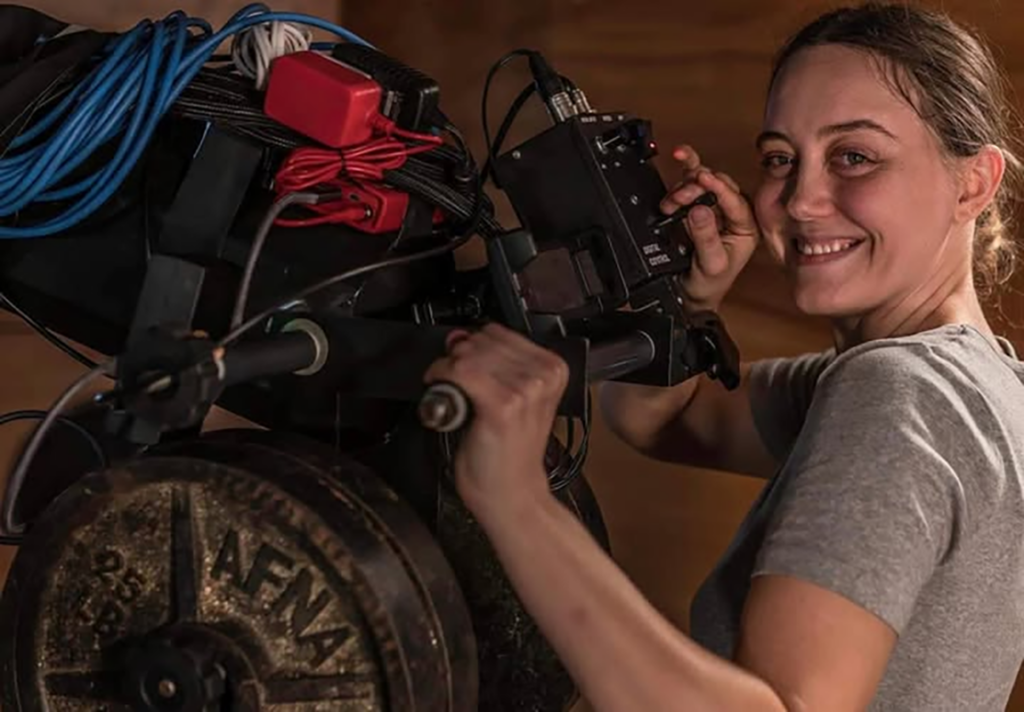
Fiona Walkington came to Happy Valley from Richmond, Virginia, with a background that includes theater, costume design, film production, public broadcasting and independent media. She has studied in Milan and worked on projects exploring the relationship between people, places and the stories communities tell about themselves.
Someone arriving here for the first time sees Happy Valley differently than those of us who have lived here for years.
One of the first things Fiona noticed was how willing people were to connect with her.
“The sense of community is incredible and everybody’s so open.”
What interested me was how quickly those connections led to participation. She started meeting people in the creative community, contributing to film projects and becoming involved with Penn State.
We spend a lot of time talking about attracting people to Happy Valley through jobs, housing, amenities and economic opportunity. All of those things matter, but Fiona’s experience reminded me that getting someone here and helping someone feel that they belong here are two different things.
The second part often begins in remarkably ordinary ways. Someone invites you to something. Someone tells you about an organization you did not know existed. Someone introduces you to a person you should meet. You show up somewhere for the second or third time and begin recognizing people.
Those are the first threads.
Fiona has done creative work examining Richmond’s James River and the people whose lives intersect with it. I am interested to see what she notices here because someone looking at Happy Valley with fresh eyes can help the rest of us notice things we have stopped seeing.
Her experience also gives us something to think about. If we succeed in bringing talented people to Happy Valley, how good are we at helping them become part of the community once they arrive?
A job might bring someone here. The connections they make after arriving may have much more to do with whether Happy Valley eventually feels like home.
Watch the full conversation with Fiona Walkington
Nate Woodman: How Many Threads Does It Take to Pull Someone Home?

My conversation with Nate was different because he is my youngest son, and I had an agenda.
Nate grew up in State College and now lives in Encinitas, California. His two brothers have also built their lives elsewhere. As their father, I have what I consider a sound long-term population growth strategy for Centre County, which involves getting all three Woodman boys back to Happy Valley.
Nate knew where I was going.
I asked what pathway might eventually bring him and his brothers home. Nate makes a living asking difficult questions and negotiating with people, so he quickly reversed the interview and asked what I had hoped he would say.
So much for home-field advantage on my own show.
Then he said something that changed the direction of our conversation.
“I think my house is in Encinitas, but my home still is in State College.”
Nate moved to California knowing almost nobody. Over time, his circle began to grow. Connections from Happy Valley appeared. Friends introduced friends. He became involved in running, swimming and other groups, and the unfamiliar gradually became familiar.
There is now enough of a Happy Valley contingent in Southern California that Nate has talked about forming an 814 Club.
I am still trying to determine whether the 814 Club represents progress in my campaign to get Nate home or proof that he has figured out how to export Happy Valley to Southern California.
What struck me was how much of Nate’s Happy Valley upbringing seems to have traveled with him.
Growing up here meant Science Park Pool, summer swimming, school, coaches, friends and families who knew one another. Different circles overlapped. A friend from one part of your life introduced you to people from another.
Nate seems to be recreating some of that in Encinitas without necessarily setting out to do it. He joins things, organizes people, introduces friends to other friends and keeps showing up. Over time, a place where he initially knew almost nobody has developed into a community around him.
When we talked about Science Park Pool, Nate remembered how unusual the mix of people could be. Different ages, different abilities and kids who might not otherwise have spent much time together became part of the same group.
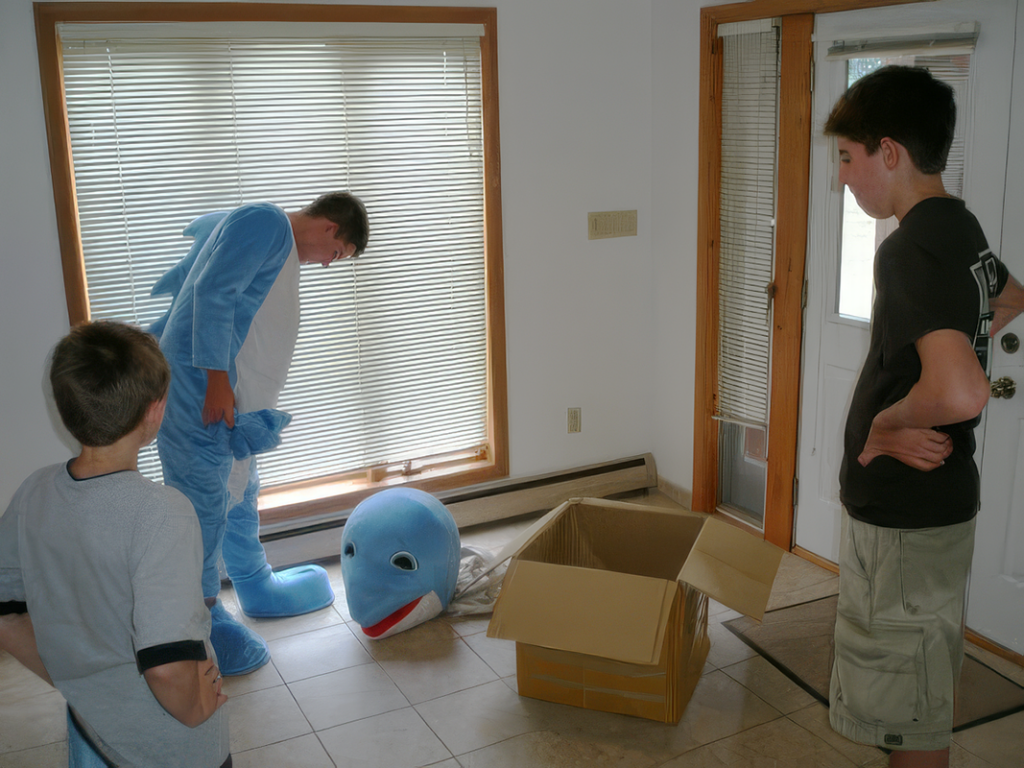
Some of my favorite memories as a father come from those summers when all three boys were involved at Science Park. We even got into the mascot business with Danny the Dolphin.
Eventually I managed to get Nate back to my original question.
When are you coming home?
He did not give me a date. Instead, he gave me a better way of thinking about it.
“The more threads you have calling you back home, the easier it is to make that jump to come home.”
That may be one of the most useful observations we have heard during these conversations.
What are those threads?
Parents can be one. Brothers and old friends can be others. A career opportunity matters. So does the ability to afford a home, start a business, find people who share your interests or someday raise a family. A swim team can be a thread. A neighborhood can be one. So can a coach, a favorite restaurant, a trail, a tradition or the friend you have known since first grade.
Nate also made another critical point. People need agency over their own lives. He and his brothers have their own paths to follow, and no amount of parental enthusiasm changes that.
The challenge for Happy Valley is not to convince people that they owe it to us to come back. It is to make sure there are meaningful threads here if and when they decide the time is right.
The 814 Club tells me those threads can stretch 2,500 miles without necessarily breaking.
Watch the full conversation with Nate Woodman
John Rogers: Helping Other People Put Down Roots
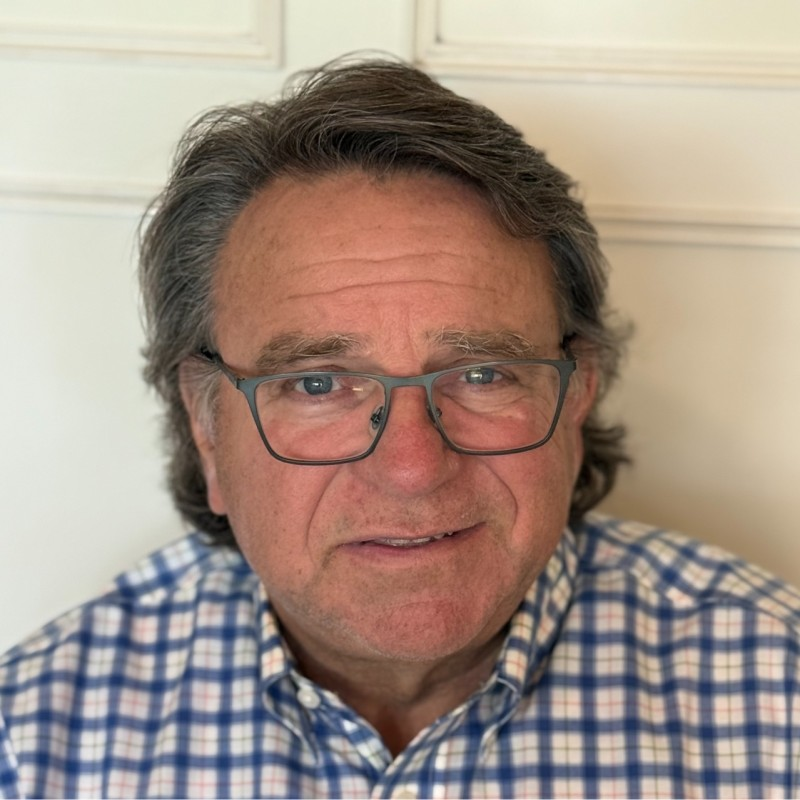
John Rogers came to State College from Mifflin County in 1988. An important part of his story began with something many people can understand. He was uncomfortable speaking in front of people.
John enrolled in a Dale Carnegie course, and the confidence he gained changed the direction of his professional life.
“The professional confidence that I got… was life-changing.”
That confidence contributed to a career focused on leadership, communication and professional development. John and his wife chose State College as their home base, raised five children here and became deeply connected to the community even as his professional work expanded elsewhere.
What interested me was how something John initially pursued for himself eventually became something he spent much of his career helping other people develop.
John talks about servant leadership as a mindset rather than a management technique. During our conversation he offered a question that applies well beyond business:
“Am I first interested in being helpful and useful to another person?”
There is a lot in that question when you apply it to a community.
John sees connection happening in ordinary places, including the pickleball court. Someone shows up, gets invited into a game, meets a few people and eventually starts recognizing faces.
Nobody announces that community building is taking place. It happens because somebody welcomed somebody else.
John’s story added another dimension to what we were hearing. People need opportunities to make a living in a community, but they also need opportunities to contribute to it.
Over the years, John has gone from someone trying to develop his own confidence to someone who has helped many other people develop theirs. Those investments in other people create roots that are difficult to measure but easy to recognize when you see them.
Watch the full conversation with John Rogers
John Walls: Why Belonging Has Such a Powerful Effect
John Walls gave us another way to understand much of what we had been hearing.
His work with NeuroBuilt examines neuroscience, leadership and human behavior, including what happens when people feel valued and connected and what happens when they do not.
During his return visit to Connect Happy Valley AM, we discussed the SCARF model and its five social factors: status, certainty, autonomy, relatedness and fairness.
The terminology may come from neuroscience and organizational behavior, but the ideas are familiar.
People want to know that they matter. They want some understanding of what is happening around them and some control over their circumstances. They want relationships, and they want to believe they are being treated fairly.
John summed up his approach to leadership this way:
“I’m here to serve them.”
His conversation made me think differently about Fiona arriving here, Nate building a community in California and John Rogers spending decades investing in other people.
People are constantly receiving signals about whether they belong.
Who welcomed you? Who remembered your name? Who introduced you to someone? Did someone give you an opportunity? Did you find a group where you could contribute? Is there somewhere you can walk into and expect to know somebody?
None of those things sounds particularly profound on its own. Together, they create something that is.
Watch the full conversation with John Walls
The Threads That Make a Place Home
Something has been happening in our Connect Happy Valley conversations that I did not set out to find.
Guests keep reaching for similar language to describe community. We hear about roots, gardening, cultivating relationships, the fabric of a community and now Nate’s threads.
The more I hear it, the more I think they are describing different parts of the same thing.
A community is not something we simply market. It is something people build together over time.
The threads are the relationships and experiences connecting us to one another. As enough of those threads cross and strengthen, they begin to create the fabric of a community. Like a garden, that fabric also needs attention. New things have to be planted. People have to be welcomed. Relationships need time and opportunities to grow.
Maybe that is also why telling these stories matters.
A story can become a thread.
Someone reads about Fiona and decides to introduce themselves. Someone hears John Rogers and decides to become more involved. Someone listens to John Walls and begins thinking differently about how people experience their organization. Someone who grew up here hears Nate talking about the 814 Club and realizes there are Happy Valley connections wherever they happen to be living.
That is what I hope Connect Happy Valley can help make easier.
We want people to discover the people, businesses, organizations, activities and opportunities around them and then go a little deeper into the community.
For those who grew up here and left, perhaps we should also stop concentrating so much on the question I keep asking my sons:
“When are you coming back?”
I admit this will require some personal adjustment.
The better question may be:
Are we creating enough threads worth coming back to?
Good jobs are threads. Family is a thread. Lifelong friends are threads. Schools, neighborhoods, recreation, local businesses and traditions can all be threads. So are those seemingly insignificant places where somebody knows your name and notices when you have not been around.
Enough of those threads together create something difficult to manufacture and even harder to replace.
They create home.
Nate is still in Encinitas. His brothers are still elsewhere. I received no firm relocation commitments as a result of these interviews.
But there is talk of an 814 Club 2,500 miles away.
As a father, I am going to count that as progress.
As someone working on Connect Happy Valley, I think it tells us something even more important.
Our job may not be to pull people toward Happy Valley. It may be to keep creating and strengthening the threads that give people a reason to find their own way into the community, deeper into it or someday back home.