By Greg Woodman
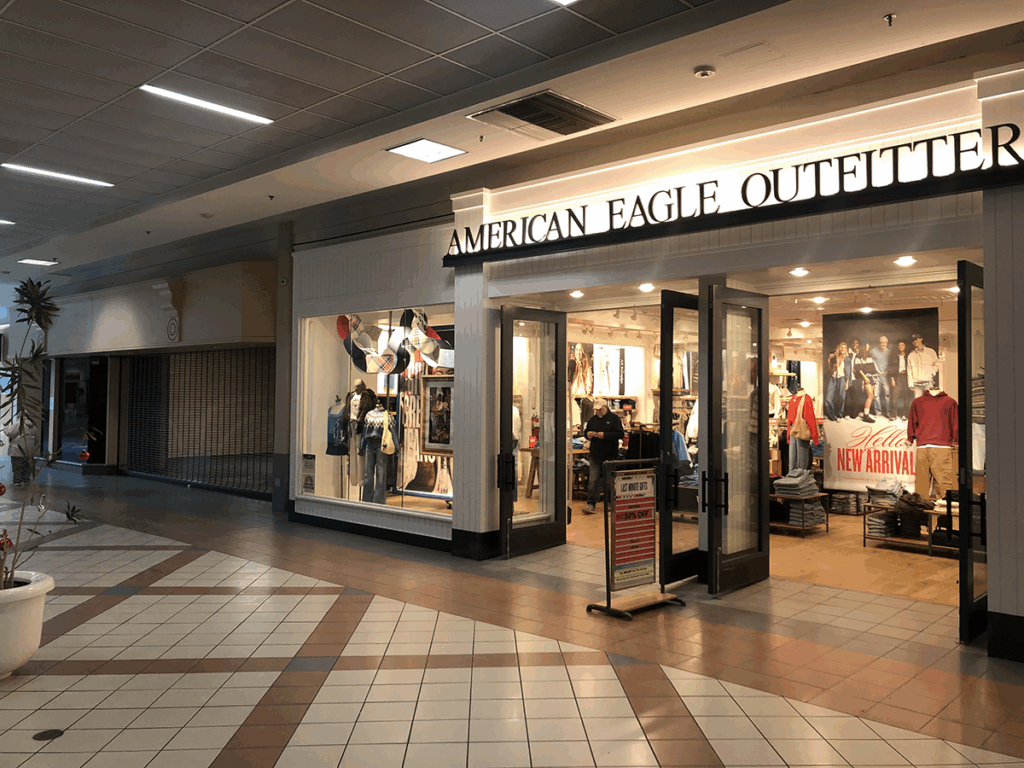
The American Eagle store at Nittany Mall is closing.
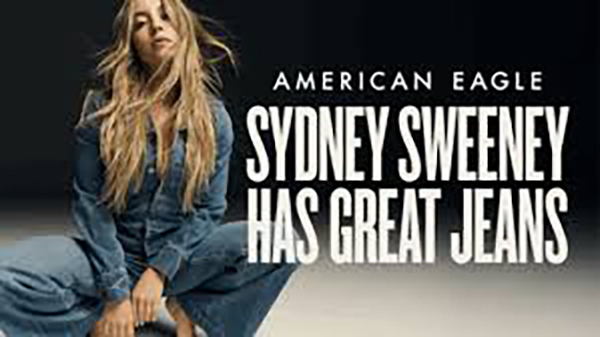
That news lands at the same moment the brand is riding one of the biggest awareness waves of the year. A national campaign featuring Sydney Sweeney. Massive reach. Cultural relevance. Constant attention.
Here’s the part that should give us pause. In just a few months, a casino is opening in that very same mall. You could hardly ask for a stronger magnet for foot traffic.
If awareness and proximity were enough, this store should have been positioned to benefit.
Instead, it’s shutting down.
This isn’t a critique of the campaign. By modern marketing standards, it worked. It’s simply a signal in the noise, especially here in Happy Valley.
A College Town With Every Advantage
State College isn’t lacking customers.
We’re a college town with roughly 50,000 students, about 160,000 residents across the county, and a region that attracts more than 5 million visitors every year.
And yet, when the closing was announced, many people reacted with genuine surprise.
“I didn’t even know that store was still there.”
That quiet sentence matters more than the headline.
Attention Is Easy. Relevance Is Harder.
It’s easy for boards and leaders to look at a campaign like this and think, if only we had that kind of awareness.
Who wouldn’t?
But the Nittany Mall closure forces a harder and more useful question.
Did it work in the way that actually matters?
Not did it trend.
Not did it win awards.
Did it put people in the store?
Did it justify the rent?
If attention at that scale can’t keep a store open here, in a town full of students, residents, visitors, transit, and foot traffic, then attention alone isn’t the lever we think it is.
Awareness Is Easy to Celebrate. Revenue Is Harder to Face.
Locally owned businesses and nonprofits are struggling, not just the few stores still hanging on at the mall. Many are down ten to fifteen percent year over year. Baby, it’s cold outside.
These organizations are what make Happy Valley sticky. They’re why people stay after graduation and why so many alumni want to retire here.
Yet boards still celebrate reach and check off the familiar boxes of how “we’ve always done marketing.”
Meanwhile, revenue is off. Costs are up. Marketing spend keeps climbing.
So, the quieter question underneath all of it is this.
How many new, real customers have shown up this year?
And did we go deeper with the ones who already cared?
Not clicks.
Not impressions.
Humans.
The Real Shift: From Performing to Guiding
What’s really happening here isn’t a failure of marketing tactics. It’s a failure of roles.
For years, brands and organizations were taught to be the hero of the story. Look at us. Watch what we did. Notice our campaign.
That worked when attention was scarce.
Today, attention is everywhere.
When everything is shouting, people tune out.
What’s needed now isn’t louder messaging. It’s clearer purpose.
People don’t need another hero. They need a guide.
Someone who understands their problem.
Someone who knows the terrain.
Someone who can calmly say, this is why we exist and how we can help.
When communication shifts from “look at us” to “this is the problem we’re solving for you,” something changes. People lean in. Trust builds.
That isn’t performance marketing.
That’s service.
This Is Not a New Idea
More than a century ago, the Independent Order of Odd Fellows understood this instinctively.
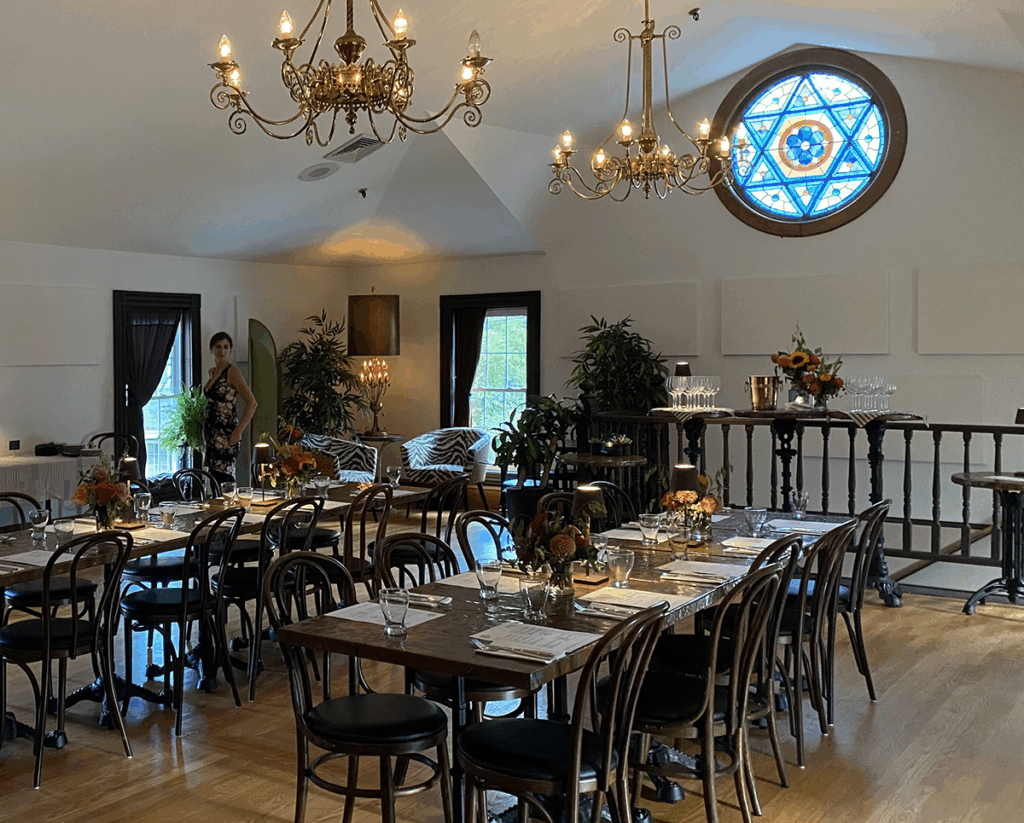
When the Odd Fellows Hall in Pine Grove Mills was completed in 1901, it wasn’t built as a monument. It was built as a working third space. A place for gathering, service, and civic life.
Its mission was practical and human: visit the sick, relieve the distressed, bury the dead, and educate the orphan.
At the center of the hall is a stained-glass window anchored by three principles.
Friendship.
Love.
Truth.
The Odd Fellows weren’t trying to impress anyone. They weren’t the hero. The community was.
That window wasn’t about attention. It was about purpose.
Why That Model Matters Now
Today, the building lives on as Pine Grove Hall, stewarded by Liz Grove, who saw not just a historic structure, but a living gathering place.
Its continued use is a reminder that communities don’t grow because they’re loudly marketed. They grow because people feel welcomed, understood, and connected.
That’s the thread Connect Happy Valley is exploring.
What Connect Happy Valley Is Trying to Do
Connect Happy Valley is a local social experiment rooted in a simple idea.
What if we could help tell the stories of the businesses, nonprofits, and people who make Happy Valley special in a way that builds trust instead of noise?
Not louder stories.
Clearer ones.
Stories that treat the community as owners, not renters. Stories that invite dialogue instead of broadcast. Stories that help people see where they belong and why a place matters.
Over the past year, more than 35,000 real humans read Connect Happy Valley articles and e-letters. About 7,000 people receive the weekly e-letter, showing up week after week.
A small number of local partners report something telling. This approach generated more real conversations and leads than louder, more traditional channels.
Not because it was flashier.
Because it was human.
Consider This Moment
You’re reading this right now, maybe with coffee.
No influencer pushed it.
No algorithm screamed.
And yet here we are. One person talking to another.
That’s the point.
If one thoughtful connection happens, it already matters.
Love Local.
Love Happy Valley.

One Response
Great article about the difference between branding and effective marketing. It made me think about how the company I work for and some other organizations I am involved in market ourselves. I think we do well but see room for improvement after reading this.
I also love how it emphasizes what Connect Happy Valley is all about. It’s the first word in the title…connections.