
June 24, 2026
I spent my career as an engineer, and engineers are trained to ask a simple question before doing anything else: what is the system actually producing?
Not what the brochure says it produces. Not what the org chart implies it should produce. What measurable output leaves the system and enters the world?
Apply that question to a university and the conventional answer is credentials. Degrees, transcripts, certificates. The assumption has been that employers want proof of knowledge, and the university’s job is to certify that knowledge has been transferred.
But credentials are not the product.
The product is the transformed human being.
The student who arrives uncertain and leaves capable. The young person who learns not just what to think but how to lead, how to collaborate, how to recover from failure, how to build trust with strangers, how to navigate ambiguity when there is no script. The graduate who can do the things that matter most in a world where artificial intelligence is rapidly commoditizing the things that used to matter most.
Penn State has been in the human-transformation business all along, and the proof is hiding in plain sight.
Over a thousand student organizations, intramural sports programs, club teams, service groups, project teams, and volunteer committees operate across campus every year. Most prospective families hear about them as an afterthought, a bullet point between dining options and residence hall amenities.
That is a catastrophic failure of engineering.
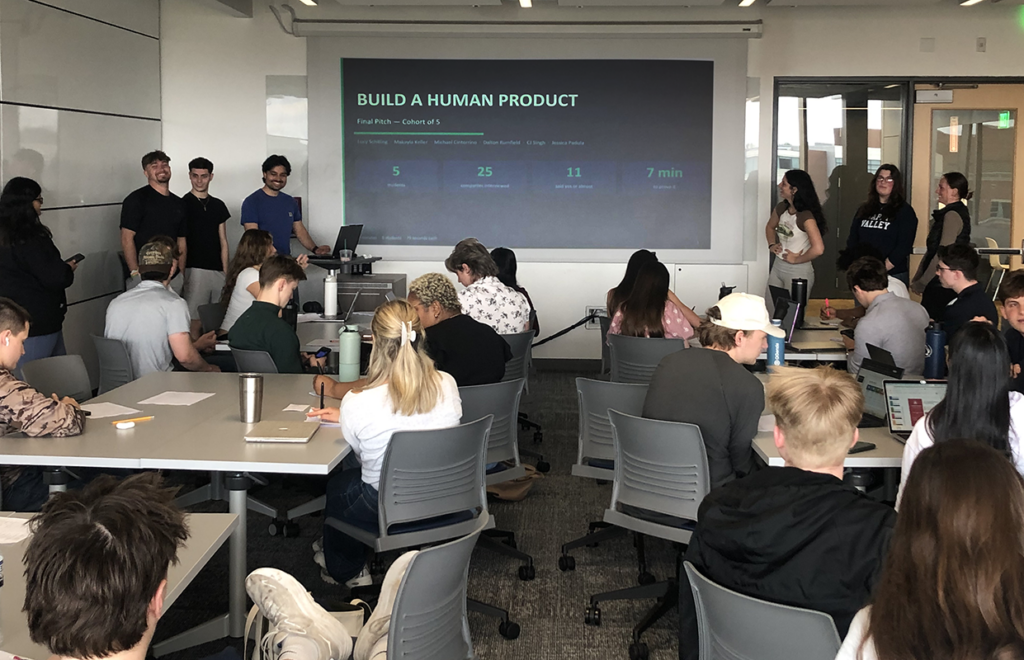
These organizations are the laboratory component of everything the university claims to value. The classroom teaches leadership theory; the student organization meeting at nine o’clock on a Tuesday night teaches leadership. The lecture hall explains project management principles; the engineering competition team forces a twenty-year-old to manage schedules, personalities, budgets, and the gut-wrenching discovery that a plan can fail in ways nobody anticipated. The seminar discusses ethics in the abstract; the club executive board confronts an actual ethical dilemma when a teammate disappears before a major event, and someone must decide what to say and what to do.
Consider what students actually learn when they run one of these organizations: how to recruit volunteers who have no obligation to show up, how to manage money when the consequences of mismanaging it are public, how to resolve conflict between people who must keep working together after the argument, how to build a reputation among peers who will remember whether you delivered on your promises.
These are exactly the skills employers say they cannot find in new graduates.
These are exactly the skills artificial intelligence cannot replicate.
These are exactly the skills that determine whether someone becomes a leader or remains a passenger.
The comparison to video games is instructive. A video game can develop strategic thinking, but a video game runs on rules someone else programmed. A student organization involves actual humans with actual emotions and competing priorities, and the complexity cannot be scripted. When a teammate ghosts, when a faculty advisor delivers bad news, when two friends on the executive board stop speaking, the student leader must figure it out in real time with real stakes and no reset button.
This is where character gets built.
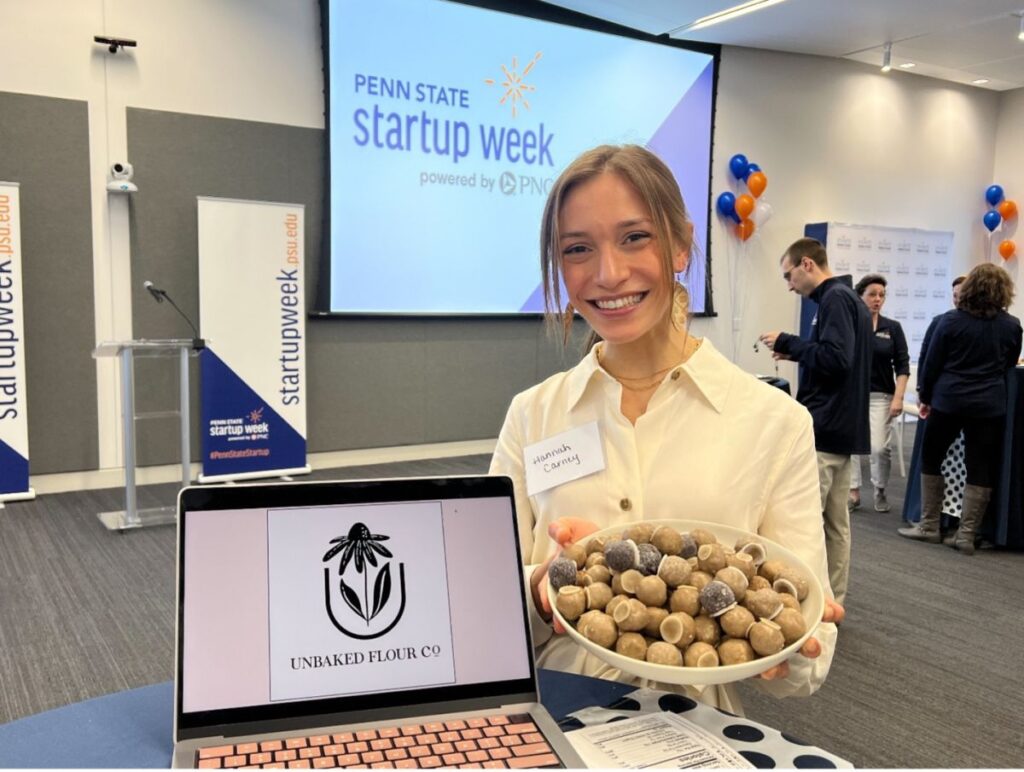
Penn State already possesses one of the most powerful developmental ecosystems in American higher education. The hundreds of organizations operating across campus function collectively as a distributed leadership academy, an entrepreneurship incubator, a project-management laboratory, and a civic-engagement training ground running parallel to the formal curriculum.
The classroom provides knowledge. The organization provides experience. Together they develop judgment.
If Penn State wants to differentiate itself in an era when AI is about to commoditize technical credentials, this is the story worth telling. Not “we have great research” or “we have a beautiful campus” or “we have championship athletics,” though all of those remain true. The story is simpler and more powerful: we give students a thousand chances to practice leading real people through real challenges before the stakes become career-ending.
That story does not stop at graduation.
The same forces that make student organizations valuable make community organizations valuable. The same skills developed in a club meeting are developed on a volunteer board, a civic committee, and a nonprofit leadership team. The laboratory model extends into every community where people gather to accomplish something none of them could accomplish alone.
Connection is not a soft idea. Connection is how communities develop the leaders they need, how newcomers find belonging, how ideas find collaborators, how trust gets built one interaction at a time.
The university and the community are one ecosystem. The health of that ecosystem depends on how well it helps people connect, contribute, and grow into the leaders the next generation will need.
Penn State has students. Happy Valley has the community. The only question is whether both can see what they already possess and commit to building on it deliberately.
The classroom teaches what to know.
The organization teaches what to do.
The community teaches who to become.
That is the education worth marketing.
Now I want to hear from you. Did a student organization, club team, or volunteer role shape your career more than you expected? What did you learn outside the classroom that the classroom never could have taught you? Drop a comment and tell your story.
Dr. Frank Archibald is a retired ARL and mechanical engineering faculty member. This is the second of his five-part series that will appear here on Connect Happy Valley contemplating the future of college.