


April 22, 2026
People came to Happy Valley Hacks on Sunday because they wanted connection. Some were new and felt boxed in by Penn State. They did not know how to get away from campus, where to go that felt like “real town,” or how to meet people who were not students or coworkers. Others had been here for years and realized they had never actually told anyone the small things that make their life here work. That mix of newcomers and long‑timers shaped everything that followed.
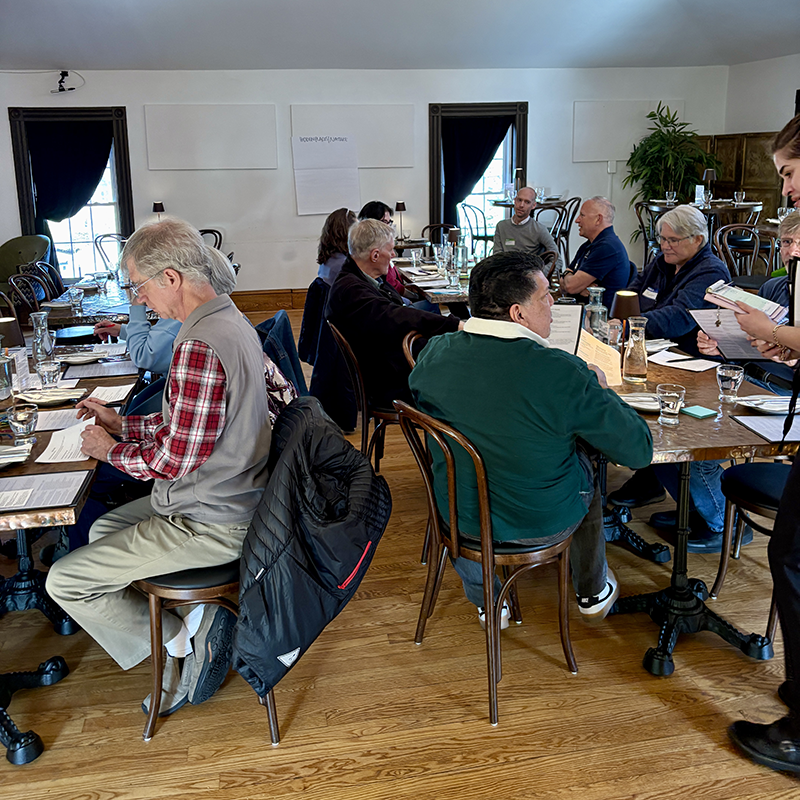
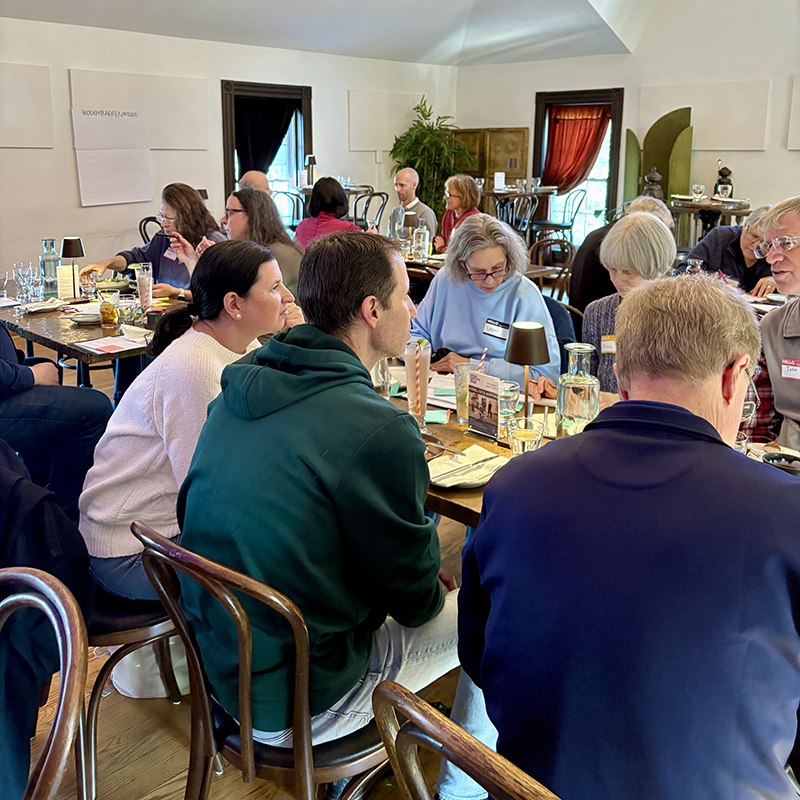
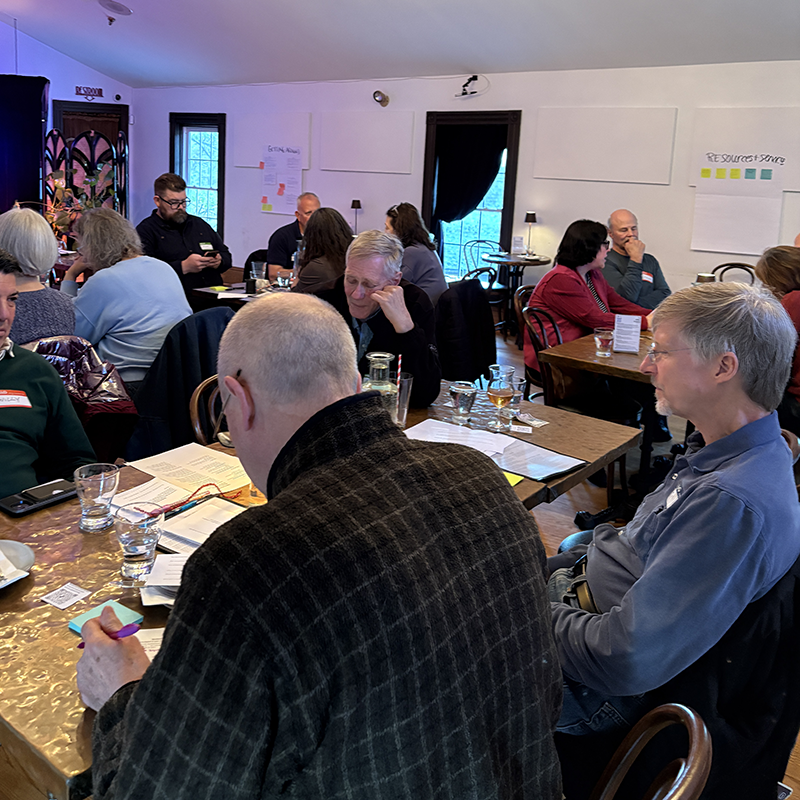
We framed the night as Blue‑White Zone work. Blue Zones research talks about small groups of people who see each other regularly, share practical information, and help each other navigate daily life. Those everyday ties help people feel rooted and less alone. Our version in Happy Valley is a Blue‑White Zone. The evening was about surfacing the small patterns that make that kind of life here more likely and getting them onto paper where others can use them.
The format was simple. Tables were labeled with four themes: “Getting Around,” “Hidden Places and Nature,” “Resources and Services,” and “How To Meet People.” People talked for a few minutes about what had been hard or slow to figure out, then turned those stories into short, concrete tips on half‑sheets of paper. Each card named a specific place or pattern and gave enough detail that someone new could try it. The same concerns kept surfacing: Where do you go if you just want to hang out? Is there anywhere to go that is not all students? If you show up alone, will it be weird?
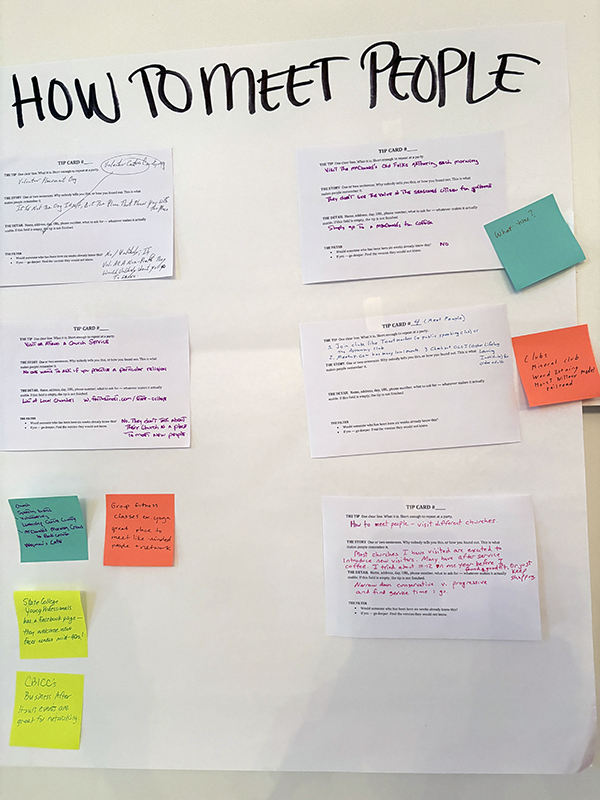
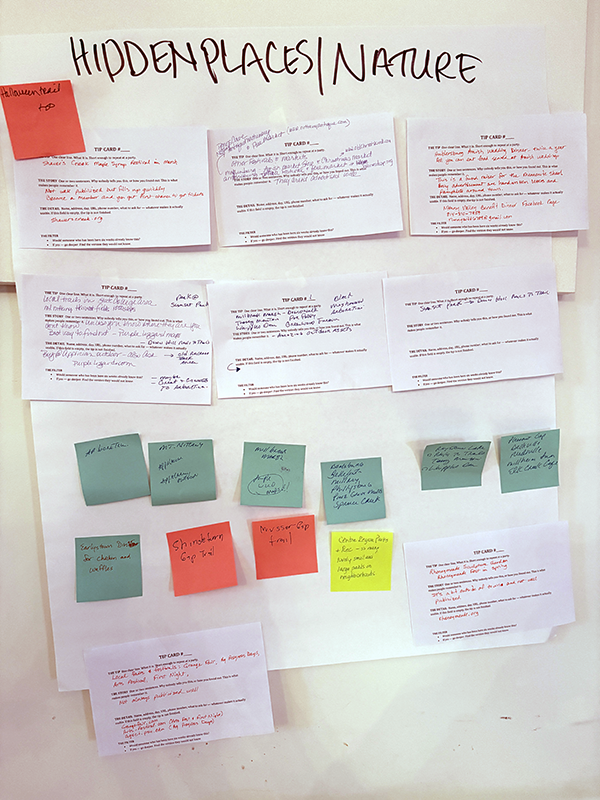
Once those questions were on paper, we hung them on the walls. You could see how often the same needs and places were appearing. The practical and the social kept overlapping. “Getting Around” cards named calmer routes and nearby towns like Bellefonte, Boalsburg, and Millheim, where you might start seeing the same faces at markets or diners. “Hidden Places and Nature” mapped Millbrook Marsh, Black Moshannon’s Bog Trail, the Shaver’s Creek Maple Harvest Festival, Rhoneymeade, and a chain of small parks and villages. Those tips did not just say “go hiking.” They quietly answered: Where do you park, when is it good to go, and can you invite someone who is not a hardcore outdoors person?
“Resources and Services” surfaced the supports that make it easier to live here in community. Schlow Centre Region Library came up as a hub not just for books but for passes, maps, and kits that let people explore and host others without spending a lot. (Did you know you can check out a ukulele?!) People named community theaters, arts groups, and hard‑to‑find service businesses that become trusted recommendations once you are plugged in.
The most direct cards on connection sat in the “How to Meet People” section. People wrote about volunteer roles where the same group shows up every week, local clubs that meet consistently, adult‑learning programs, group fitness classes, recurring business events, and churches where strangers introduce themselves and invite newcomers to coffee. Others talked about morning coffee crews at diners and cafés and how simply going at the same time each week turned strangers into familiar faces.
We also introduced seed cards. Some ideas on the wall were more than single tips. They sounded like things that might want to exist in the world: a “free little tool shed” for shared tools in town, an ice cream field trip series to explore local scoops. When an idea like that caught, the person who cared about it filled out a seed card with a first step and a name, so we can follow up on ideas that might grow into ongoing Blue‑White Zone routines, not just one‑time hacks.
We ended the night with a wall full of tips, a handful of seed ideas, and several people who said the quiet part aloud. They are not just looking for life hacks. They are looking for ways to get out of the Penn State ecosystem, meet people who are not in their department, and feel more at home in this valley.
The material from Sunday is now being shaped into a public Happy Valley Hacks guide. The guide is not live yet, but the tip submission form is! (https://forms.gle/s3w4LP12n1MEyphw8) As the guide comes together, it will give newcomers and long‑timers simple examples of where people already gather and how to join them. If you notice something missing, you can add your own tip and help make our Blue‑White Zone a little more connected and a little less stuck.
We are not sure where we will land next month, but we are going to keep experimenting with new ways to get into real‑world rooms, trails, and tables together. Stay tuned!